
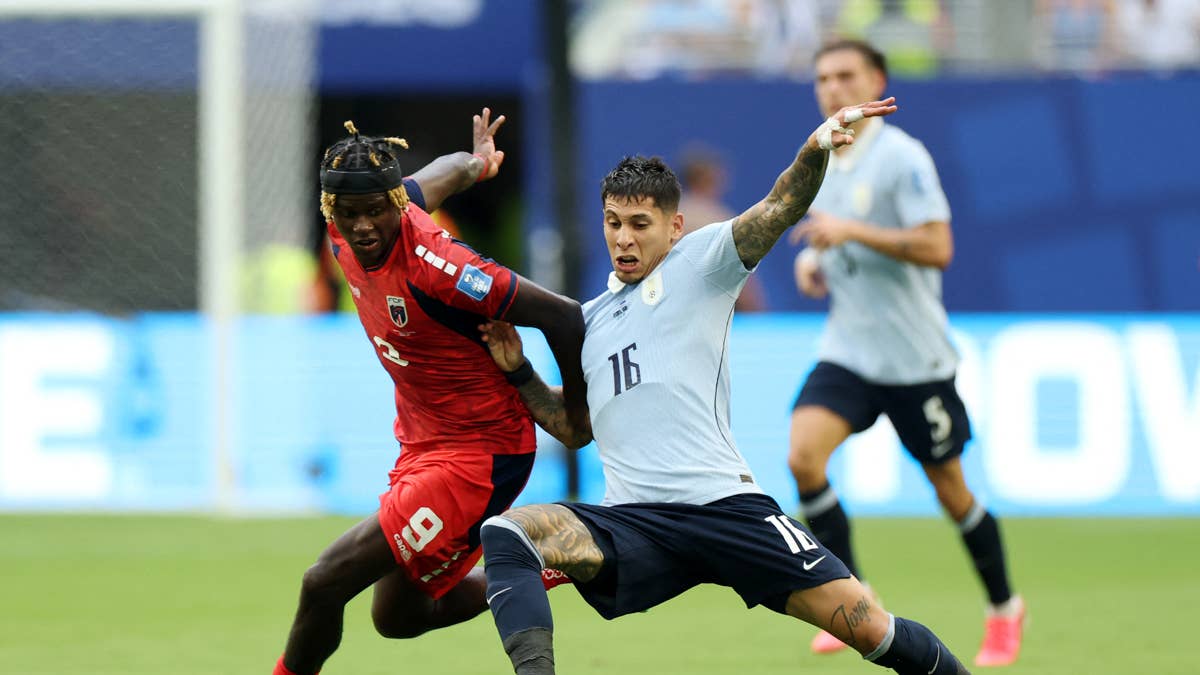
Uruguay vs Cabo Verde FIFA World Cup 2026 Post-Match Analysis: Hélio Varela’s Historic Strike Earns Blue Sharks a Stunning 2-2 Draw in Miami
The Uruguay vs Cabo Verde FIFA World Cup 2026 Group H encounter at Hard Rock Stadium in Miami Gardens on June 21 was nothing short of a footballing miracle unfolding in real time. Cabo Verde — a tiny island nation making their World Cup debut and still riding the enormous wave of confidence generated by their historic goalless draw against reigning European champions Spain — did it again. Hélio Varela, introduced as a substitute in the second half, equalised in a record-breaking two minutes and 16 seconds after coming on, cancelling out Uruguay’s second-half lead to earn an extraordinary 2-2 draw and send shockwaves through Group H.
This was one of the most emotionally charged, tactically fascinating, and ultimately breathtaking matches of the entire 2026 FIFA World Cup group stage. Kevin Pina had opened the scoring with Cabo Verde’s first-ever World Cup goal — a stunning 30-yard free kick in the 21st minute. Uruguay fought back twice, only to be denied the win each time by an island nation that simply refuses to read the script. Marcelo Bielsa’s men now face a must-win final group game against Spain, while Cabo Verde stand on the verge of one of the greatest World Cup group stage stories ever told.
Let’s break down every goal, every key moment, and every tactical detail from an unforgettable evening in Miami.
Uruguay vs Cabo Verde FIFA World Cup 2026 — Full Match Summary
Cabo Verde Make History — Kevin Pina’s Stunning Free Kick
The Uruguay vs Cabo Verde FIFA World Cup 2026 match was always going to carry enormous emotional weight for the Blue Sharks. Coming into the game on the back of their stunning 0-0 draw against Spain — a result that had been celebrated across the African continent and the global footballing community — Bubista’s side showed from the very first whistle that they had come to Miami to compete, not to survive.
Uruguay, meanwhile, started the match at a high tempo. Marcelo Bielsa’s men were determined to avoid a repeat of their frustrating draw against Saudi Arabia, and in the opening 20 minutes, La Celeste moved the ball quickly and created penetration through sharp diagonal passes. Captain Federico Valverde drove forward from midfield repeatedly, and the early signs suggested that Uruguay’s quality would eventually tell.
Then, in the 21st minute, Cabo Verde made history that will be told for generations.
Rodrigo Bentancur — who had already been booked for a tactical foul on Telmo Arcanjo — gave Cabo Verde a free kick on the edge of the area, roughly 30 yards from goal. Up stepped midfielder Kevin Pina, a player few outside the footballing world had heard of before this tournament. Pina struck the ball with extraordinary power and precision, bending it over the Uruguayan wall and into the bottom right corner past a helpless Fernando Muslera. The net rippled. The bench exploded. The Miami crowd — packed with Cabo Verde supporters who had made the journey to Florida — erupted in scenes of pure, uncontained joy.
It was Cabo Verde’s first-ever goal in FIFA World Cup history. And it had come from 30 yards. The moment will live forever.
Uruguay were stunned. For the next 20 minutes, Bielsa’s men created chance after chance but were met by the same infuriating combination of disciplined Cabo Verdean defending and individual brilliance from goalkeeper Vozinha — the 40-year-old veteran who had already become one of the tournament’s great stories after his Player of the Match performance against Spain. Valverde took five shots in the first half alone, yet none of them found the target. Uruguay’s frustration mounted visibly with every passing minute.
The breakthrough finally came in the 44th minute. Manuel Ugarte’s incisive passing found Rodrigo Bentancur charging into the box, and the ball broke perfectly for Maximiliano Araújo, who slid in at the back post to steer it home after a brief VAR check confirmed the goal was valid. The equaliser was greeted with huge relief rather than celebration from the Uruguayan players — they knew the job was far from done.
Then came a moment that could have — and perhaps should have — broken Cabo Verde’s spirit entirely.
Deep into the six minutes of first-half stoppage time, in the 45+6th minute, Agustín Canobbio completed a rapid turnaround with a close-range finish that gave Uruguay the lead going into the break. It was the kind of cruel, late sucker punch that deflates even the most resilient teams. Uruguay — who had been behind, level, and now somehow ahead — went into half-time having survived enormous early adversity.
Half-Time: Uruguay 2-1 Cabo Verde
Hélio Varela’s Record-Breaking Equaliser — History in Miami
The second half of the Uruguay vs Cabo Verde FIFA World Cup 2026 match began with Uruguay apparently in control. Bielsa’s side came out with a more organised defensive structure, determined to protect their lead and see the game out with the professionalism that a two-time World Cup winner should possess.
But Cabo Verde simply would not go away.
Coach Bubista made the substitution that changed everything, introducing Hélio Varela from the bench in the second half. The impact was immediate — and historic. In a moment that ESPN confirmed will live in football history books, Varela scored just two minutes and 16 seconds after coming on — making it the fastest goal ever scored by an African substitute at a FIFA World Cup since Roger Milla’s legendary substitute strike for Cameroon against Russia in 1994 (one minute, 24 seconds).
Varela’s goal in the 61st minute was everything a World Cup moment should be — spontaneous, electric, and utterly unexpected. The strike levelled the score at 2-2 and transformed the atmosphere inside Hard Rock Stadium into something approaching delirium among the Cabo Verde supporters.
Uruguay, suddenly rocked again, were forced to throw everything forward in search of the winner. Bielsa made bold attacking substitutions — introducing Darwin Núñez and Nicolás de la Cruz — in an attempt to recapture the lead. The Manchester United forward, so dangerous in the Premier League, caused immediate problems for Cabo Verde’s defence and had two genuine opportunities to make it 3-2 in the final 20 minutes.
But Vozinha — again, magnificent — made the saves he needed to make. And crucially, in the final moments of a frantic ending, Rodrigo Bentancur’s last-ditch tackle prevented what would have been a certain Cabo Verde third goal and preserved Uruguay’s point in stoppage time. It was the defining defensive intervention of the match — heroic, desperate, and absolutely essential.
Final Score: Uruguay 2-2 Cabo Verde
Tactical Breakdown — Uruguay vs Cabo Verde FIFA World Cup 2026
Bielsa’s Uruguay — Dominant But Consistently Frustrated
Marcelo Bielsa deployed Uruguay in a fluid 4-3-3 system for the Uruguay vs Cabo Verde FIFA World Cup 2026 match, with Fernando Muslera in goal and a back four of Guillermo Varela, Sebastián Cáceres, Mathias Olivera, and Juan Manuel Sanabria. Manuel Ugarte and Rodrigo Bentancur formed a double midfield pivot behind the creative focal point of Federico Valverde, who was given freedom to drive forward and dictate the tempo.
Uruguay’s first-half domination in terms of attempts — Valverde alone took five shots — told the story of a team that could create openings but lacked the clinical edge to convert them consistently. Valverde’s five attempts without hitting the target was a microcosm of Uruguay’s broader World Cup problem across two matches — magnificent in movement and dangerous in approach, yet ultimately wasteful in the final third.
Bielsa’s decision to introduce Darwin Núñez in the second half added an entirely different dimension — the raw pace and physical presence of the Manchester United forward gave Cabo Verde real defensive problems that they had not faced with Federico Viñas leading the line. Had Núñez come on earlier, the result might have been very different.
Cabo Verde’s Tactical Bravery — Bubista’s Blue Sharks Refuse to Die
The tactical setup that coach Bubista deployed for Cabo Verde in the Uruguay vs Cabo Verde FIFA World Cup 2026 match was an evolution of the system that had frustrated Spain so effectively. The Blue Sharks set up in an organised 4-5-1 mid-block, with Kevin Pina providing the creative outlet from midfield and Gilson Benchimol acting as an isolated striker tasked primarily with holding the ball and bringing teammates into play.
What made Cabo Verde so effective — and so entertaining — was their willingness to take genuine attacking risks despite being the decided underdogs. Pina’s free kick was not luck; it was a prepared, executed set-piece that showed real footballing intelligence. The introduction of Varela and his record-breaking substitute goal showed that Bubista has an excellent understanding of how to use his bench as a weapon.
Vozinha’s continued brilliance between the sticks — made all the more remarkable given he is 40 years old and playing at his first World Cup — gave the entire Cabo Verde structure a security blanket that allowed their outfield players to be braver and more adventurous than might otherwise have been possible.
Player Ratings — Uruguay vs Cabo Verde FIFA World Cup 2026
Uruguay
- Fernando Muslera — 6.0: Beaten by a long-range free kick he perhaps should have done better with. Somewhat fortunate not to be beaten a third time late on.
- Manuel Ugarte — 7.5: The metronome of Uruguay’s midfield. His incisive passing created the opening for Araújo’s equaliser and he controlled the tempo when Uruguay were at their best.
- Rodrigo Bentancur — 7.0: Yellow card for the foul that gave Pina his free kick opportunity was costly, but his last-ditch stoppage-time tackle to prevent Cabo Verde’s third goal was the moment that rescued Uruguay’s point.
- Federico Valverde — 6.5: Five shots, zero on target in the first half. The Real Madrid captain was energetic, creative, and deeply frustrated throughout a match that encapsulated Uruguay’s whole tournament so far.
- Maximiliano Araújo — 7.5: Scored the equaliser with a composed back-post finish and was one of Uruguay’s more consistent performers across the 90 minutes.
- Agustín Canobbio — 7.5: His 45+6 close-range finish to make it 2-1 just before half-time was the kind of poacher’s goal Uruguay’s attack desperately needed. A clever, opportunistic performance.
- Darwin Núñez — 7.0: Came on as a substitute and immediately caused chaos in Cabo Verde’s defence. Had two genuine opportunities to win the game. Will likely start the Spain fixture.
Cabo Verde
- Vozinha — 9.0 ⭐ (Player of the Match): At 40 years old, on the biggest stage in world football, the veteran goalkeeper produced yet another extraordinary performance — multiple crucial saves, brilliant command of his area, and the kind of experience that money cannot buy. One of the stories of this entire World Cup.
- Kevin Pina — 9.0: Cabo Verde’s first-ever World Cup goal from 30-plus yards was the defining moment of his career and one of the tournament’s great individual contributions. Solid throughout before being replaced to see out the game.
- Hélio Varela — 8.5: Two minutes and 16 seconds off the bench and already in the World Cup history books. His substitute equaliser was a moment that the entire footballing world will remember.
- Telmo Arcanjo — 7.5: The creative playmaker caused Bentancur’s early booking and was a constant menace throughout. One of Cabo Verde’s most technically gifted players and increasingly a figure to watch as the tournament develops.
- Garry Rodrigues — 7.0: Energetic and direct on the right flank. Made Uruguay’s left-sided defenders work throughout and created several dangerous situations.
- Diney Borges — 7.5: Commanding in the heart of Cabo Verde’s defence alongside Pico Lopes. Organised those around him and limited Uruguay’s best attackers effectively for long periods.
H2: Key Statistics — Uruguay vs Cabo Verde FIFA World Cup 2026
| Stat | Uruguay | Cabo Verde |
|---|---|---|
| Final Score | 2 | 2 |
| Goals | 2 | 2 |
| First-Half Shots (Valverde) | 5 (0 on target) | — |
| Red Cards | 0 | 0 |
| Yellow Cards | 1 (Bentancur) | 0 |
| Historic Milestones | — | First WC goal (Pina), Fastest African sub goal (Varela) |
The statistics from the Uruguay vs Cabo Verde FIFA World Cup 2026 match tell a story that numbers alone cannot fully capture. This was a game of emotion, history, and moments — Kevin Pina’s long-range thunderbolt, Vozinha’s ageless brilliance, Hélio Varela’s record-breaking substitute strike, and Bentancur’s last-gasp tackle that denied Cabo Verde an even more extraordinary result.
Kevin Pina’s Free Kick — Cabo Verde’s First-Ever World Cup Goal
The Uruguay vs Cabo Verde FIFA World Cup 2026 match will be remembered most vividly for the moment when Kevin Pina stepped up to take that 30-yard free kick in the 21st minute and produced a strike that will be played on highlight reels for decades.
It was not just the technical quality of the goal — the power, the bend, the accuracy — that made it so extraordinary. It was the context. A tiny island nation, playing just their second group game at their first ever World Cup, scoring against a two-time World Cup champion from distance, in front of a full house in Miami. Football rarely writes better stories.
As Bleacher Report noted in their live coverage, it was “the latest moment of magic from one of the biggest underdogs in the tournament.” No description could be more accurate.
What This Result Means for Group H
The Uruguay vs Cabo Verde FIFA World Cup 2026 draw completely reshuffled the Group H standings in the most dramatic fashion. Spain, with their 4-0 win over Saudi Arabia, sit top of Group H with four points. Uruguay and Cabo Verde are now both level on two points each with one game remaining. Saudi Arabia, still on one point, have a mathematical chance of progressing but need significant help from other results.
The final group game permutations could not be more compelling: Uruguay face Spain in what will be a monumental encounter. Cabo Verde face Saudi Arabia knowing that a win could see them through to the Round of 32 for the first time in their footballing history. Group H is, without question, the most unpredictable and entertaining group of the entire 2026 World Cup.
For the complete and fully updated Group H standings, visit the official FIFA World Cup 2026 Group H page on FIFA.com for all qualification scenarios and live points tables.
For comprehensive match analysis and reaction from Miami, ESPN’s Uruguay vs Cabo Verde live blog has full coverage including player quotes and post-match reaction.
Bielsa’s Reaction — Frustration and Respect in Equal Measure
Marcelo Bielsa’s post-match reaction after the Uruguay vs Cabo Verde FIFA World Cup 2026 draw was a complex blend of deep frustration, tactical honesty, and genuine respect for the opposition. The Argentine manager acknowledged that Uruguay’s inability to convert their first-half dominance into goals had once again been their undoing, and he accepted responsibility for the team’s lack of clinical edge in the final third.
But Bielsa also reserved significant admiration for Cabo Verde, noting that their resilience, their set-piece quality, and their collective spirit made them an extraordinarily difficult team to beat. He was also vocal on another matter — the hydration breaks, describing them in a memorable post-match quote as something that “adds nothing and takes away a lot” from the flow of the game.
For all of Marcelo Bielsa’s official post-match press conference comments and Uruguay squad updates ahead of the Spain fixture, visit the official Asociación Uruguaya de Fútbol (AUF) website for complete coverage.
What’s Next for Uruguay and Cabo Verde?
Uruguay’s final group game is against Spain — potentially the most daunting assignment remaining in Group H. Bielsa will almost certainly start Darwin Núñez from the off, and the introduction of Nicolás de la Cruz in midfield adds creative quality that La Celeste have been missing. A win, or potentially even a draw depending on the Saudi-Cabo Verde result, could be enough to advance.
Cabo Verde face Saudi Arabia in their final group game knowing that a victory would put them within touching distance of a place in the Round of 32. Coach Bubista has the players, the belief, and — crucially — the tactical intelligence to make it happen.
For Cape Verdean fans following every step of this incredible journey, the official Federação Caboverdiana de Futebol (FCF) website has all official team news and match information throughout the tournament.
For a broader tactical look at all Group H permutations heading into the final round, Sports Illustrated’s World Cup 2026 Group H analysis offers excellent editorial coverage.
Final Thoughts on Uruguay vs Cabo Verde FIFA World Cup 2026
The Uruguay vs Cabo Verde FIFA World Cup 2026 post-match analysis delivers a verdict that feels almost too extraordinary to put into words. This was a match that had everything — a historic first World Cup goal from distance, a record-breaking substitute strike, a last-gasp defensive rescue, an ageless goalkeeper defying time itself, and two nations refusing to concede defeat until the very last second of stoppage time.
Vozinha and Kevin Pina are the stars of Cabo Verde’s fairytale, but this was a collective effort that speaks to everything that makes the World Cup the greatest sporting event on earth. Uruguay, for their part, showed character in coming back twice — but must now find the clinical finishing edge that has eluded them across two group games if they are to survive the tournament’s biggest remaining test in Spain.
Group H is alive. Cabo Verde’s dream is alive. And in Miami, on June 21, 2026, the beautiful game reminded everyone exactly why we love it so much.


One Comment