

History of Football: From Origins to 2026
Introduction
The history of football is a fascinating journey that spans thousands of years, evolving from simple ball games into the world’s most popular sport. The history of football shows how a simple idea of kicking a ball developed into a global phenomenon followed by billions of fans. Today, football unites people across continents, cultures, and languages. But to truly understand the history of football, we must look back at its ancient beginnings and its long evolution into modern sport.
From early civilizations to modern competitions like the FIFA World Cup, the history of football reflects passion, culture, and continuous change.
Early Origins of Football
The idea of kicking a ball goes back to ancient times.
Ancient China (Cuju)
One of the earliest forms of football was played in China around 200 BC. It was called Cuju. Players used to kick a leather ball into a small goal without using their hands.
Ancient Greece and Rome
In ancient Greece, a game called Episkyros involved teamwork and ball control. The Romans also played Harpastum, which included passing and physical movement.
These early games show that the basic idea of football existed in many cultures.
Medieval Football in Europe
During the Middle Ages, football-like games became popular in England. However, there were no fixed rules. Entire villages would play together in open fields.
The games were often rough and sometimes violent. Because of this, some kings even tried to ban football. Still, people continued to play it.
The Start of Modern Football
Modern football began in 1863 in England when the Football Association (FA) was formed.
This was an important moment because:
- The rules were written for the first time
- Football was separated from rugby
- Hands were restricted (except for goalkeepers)
Formation of FIFA
In 1904, FIFA (Fédération Internationale de Football Association) was created in Paris.
Its purpose was to:
- Organize international matches
- Standardize rules
- Promote football globally
First FIFA World Cup
The first FIFA World Cup was held in 1930 in Uruguay.
- 13 teams participated
- Uruguay won the tournament
- It became the foundation of global football competitions
Global Growth of Football
Football spread rapidly across the world.
- Europe developed major leagues like the Premier League and La Liga
- South America produced football giants like Brazil and Argentina
- Africa and Asia embraced football as a symbol of unity
Changes in Football Rules
Football rules evolved over time:
- Penalty kicks introduced in 1891
- Yellow and red cards introduced in 1970
- VAR introduced in modern football
Club Football
Club football became very important globally.
The UEFA Champions League is the most prestigious club competition, featuring top clubs like Real Madrid, Barcelona, and Manchester United.
Football Legends
Many players shaped the history of football:
- Pelé – 3-time World Cup winner
- Diego Maradona – 1986 World Cup legend
- Lionel Messi – record-breaking modern star
- Cristiano Ronaldo – goal-scoring icon
Technology in Football
Technology improved football:
- VAR for decisions
- Goal-line technology
- Fitness tracking systems
Women’s Football
Women’s football has grown significantly, with rising global audiences and professional leagues developing across many countries.
Football in the Modern Digital Age
Football is now followed through:
- Social media
- Live streaming
- Fantasy leagues
- Esports
Football from 2010 to 2026
Recent years have shaped modern football:
- Spain dominated early 2010s
- Germany won in 2014
- France won in 2018
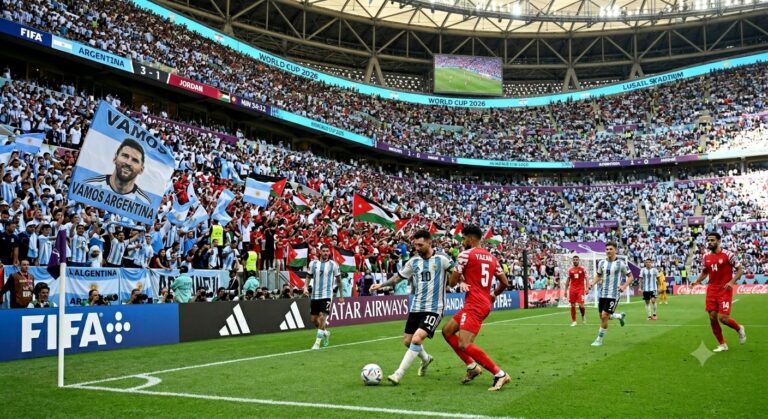
- Argentina won in 2022
The history of football in this era shows how the game became faster, more global, and more tactical.
Future of Football Beyond 2026
Football will continue to evolve with:
- Advanced technology
- Youth development programs
- Global expansion
- Sustainable stadiums
Conclusion
The history of football shows how a simple game became a global passion connecting billions of people. From ancient Cuju in China to modern World Cup finals, the history of football reflects human creativity, competition, and unity.
Even today, the history of football continues to grow as the sport evolves toward 2026 and beyond, proving that football is not just a game—but a global language that brings the world together.




SEO продвижение под ключ для малого бизнеса — реально ли это при ограниченном бюджете?
SEO продвижение молодого сайта — нужно ли сразу подключать Яндекс.Вебмастер и GSC?
Стоит ли раскрутка сайтов заказать, если сайт находится под фильтром?
Что нужно подготовить со стороны клиента, прежде чем заказать продвижение сайта?
Hi mates, nice post and pleasant urging commented at this place, I am
really enjoying by these.