


Introduction

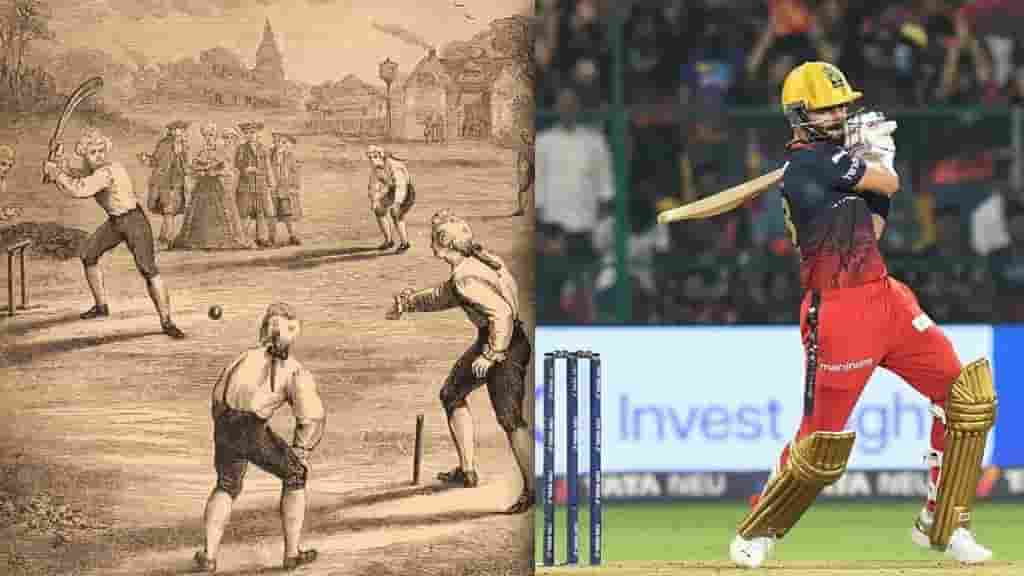
Cricket is more than just a sport—it is a global passion that connects millions of people across cultures and continents. The history of cricket shows how a simple bat-and-ball game played in rural England evolved into a multi-billion-dollar global industry by 2026.
Over the centuries, cricket has continuously developed and transformed. From timeless Test matches to fast-paced T20 leagues, the game has adapted to changing audiences, technology, and commercial demands. Understanding the history of cricket helps us see how it became one of the most influential sports in the world.
The Birth of Cricket (16th–18th Century)
Cricket is believed to have originated in England during the late 1500s. Initially, it was a children’s game played in villages, but by the 17th century, adults had adopted it as a popular pastime.
Key Developments
- Early matches were informal with no fixed rules
- Simple wooden bats and basic balls were used
- Local communities organized friendly matches
Major Milestones
- Formation of early cricket clubs
- Establishment of the Marylebone Cricket Club (MCC) in 1787
- Creation of the first official laws of cricket
By the 18th century, cricket had become England’s national sport.
19th Century: The Foundation Era 

The 19th century transformed cricket from a casual game into a structured and competitive sport.
Major Changes
- Introduction of round-arm and overarm bowling
- Rise of professional players
- First international match (USA vs Canada, 1844)
- First Test match (England vs Australia, 1877)
Impact
This period laid the foundation of modern cricket, establishing rules, formats, and international competition.
Early 20th Century: Global Expansion (1900s–1930s) 

Cricket began spreading beyond England and Australia, gaining popularity across the British Empire.
Key Highlights
- Emergence of teams like South Africa
- Increase in international tours
- Growth of competitive rivalries
Famous Moment
- The controversial Bodyline series (1932–33), which changed how teams approached tactics and strategy
Cricket was no longer just a national game—it had become international.
1940s: War and Recovery
World War II disrupted cricket significantly.
Impact
- Many players joined the military
- Matches were limited or completely stopped
After the War
Cricket returned with renewed energy, providing entertainment and unity for people recovering from difficult times.
1950s–1960s: Rise of New Nations and Modernization
This period saw the game becoming more diverse and modern.
Key Developments
- West Indies became a dominant team
- Pakistan entered Test cricket in 1952
- First tied Test match in 1960
Impact
Cricket expanded globally, and media coverage began increasing, bringing the game closer to fans.
1970s: The Birth of Limited-Overs Cricket
The 1970s changed cricket forever.
Major Innovations
- Introduction of One Day Internationals (ODIs)
- First Cricket World Cup in 1975
- Kerry Packer’s World Series Cricket
Revolution
Cricket became faster, more exciting, and television-friendly. Night matches and colored clothing made the game more entertaining.
1980s: Global Popularity Boom
Cricket reached new heights of popularity during this decade.
Key Events
- India’s historic World Cup win in 1983
- Rise of legendary players
Impact
The sport expanded into new regions, attracting millions of new fans and increasing commercial opportunities.
1990s: Professionalism and Technology
The 1990s brought major improvements in fairness and professionalism.
Key Developments
- Introduction of match referees
- Third umpire technology
- Better fitness and training systems
Impact
Cricket became more transparent, and players evolved into full-time professionals.
2000s: The T20 Revolution
The introduction of T20 cricket completely transformed the sport.
Major Changes
- First T20 format introduced in 2003
- First T20 World Cup in 2007
- Launch of leagues like IPL in 2008
Impact
Cricket became faster, more entertaining, and financially powerful. It also attracted a younger audience.
2010s: Technology and Global Leagues
This decade focused on innovation and expansion. 

Key Developments
- Decision Review System (DRS)
- Growth of global T20 leagues
- Social media engagement
Impact
Cricket became data-driven, and players turned into global celebrities.
2020s: The Digital Era (2020–2026)
The modern era has taken cricket to another level.
Major Trends
- Use of AI and advanced analytics
- Expansion of franchise leagues worldwide
- Growth of women’s cricket
Impact
Cricket is now a global entertainment industry, supported by digital streaming platforms and online fan engagement.
Evolution of Cricket Formats
Test Cricket
- Oldest format (since 1877)
- Focuses on patience and skill
One Day Internationals (ODIs)
- Introduced in the 1970s
- Balanced format
T20 Cricket
- Fastest and most popular format
- Designed for entertainment and quick results
Role of Technology in Modern Cricket
Technology has improved the game significantly:
- DRS for accurate decisions
- Hawk-Eye for ball tracking
- Snickometer for edge detection
- Wearable tech for player fitness
Economic Growth of Cricket
Cricket is now a multi-billion-dollar industry:
- Franchise leagues like IPL generate massive revenue
- Broadcasting rights and sponsorships
- Player endorsements
Women’s Cricket: A Rising Force
Women’s cricket has seen rapid growth in recent years:
- Increased global viewership
- Professional leagues and contracts
- Greater media coverage
Why Cricket Still Matters Today (MOST IMPORTANT)
Today, cricket is more than just a sport—it is a powerful mix of entertainment, business, and global culture. The history of cricket shows how the game has grown from traditional Test matches into a worldwide phenomenon followed by millions.
In my opinion, the biggest reason for cricket’s success is its ability to adapt. From five-day Test matches to three-hour T20 games, cricket has evolved with changing audience preferences.
If this evolution continues, cricket will only become bigger in the future.
The Future of Cricket Beyond 2026
Looking ahead, cricket is expected to grow even further:
- New formats and innovations
- Expansion into new countries
- Increased use of AI and virtual technology
Conclusion
The history of cricket is a story of constant evolution. From a simple village game to a global sporting powerhouse, cricket has reinvented itself in every era.
Today, the history of cricket reflects a unique blend of sport, technology, and entertainment—and its journey is far from over.